TABLE OF CONTENTS
ACADEMIC PROGRAMS
-
Brief History
Chiang Kai Shek College is the first institution of higher learning in the Philippines, founded by overseas Chinese-Filipinos. It offers education at all levels from preschool to graduate school.
In June 1939, Chiang Kai Shek High School was founded by prominent and hardworking Chinese in Manila, like Mr. Wong Chun Seng and Mr. Yu Khe Thai. It was named after Generalissimo Chiang Kai Shek to inspire young Filipino-Chinese to emulate the great personality and spirit of the late President. It initially offered a six-year program in Chinese and a four-year program in English. Three years later, the school bore the brunt of World War II– it was heavily damaged, and fourteen teachers and students were killed for participating in underground activities. The school reopened in December 1945. Under Principal Wong, together with the support of the Chinese community, it moved to its new site in August 1948.
In 1958, the Wong Chun Seng Memorial Preschool was established.
In November 2000, the Preschool and Kindergarten Department started offering the Montessori Class, and in June 2009, it opened the Day Care Center to provide respite for working parents.
With the implementation of the K to 12 Curriculum by the Department of Education under President Benigno Aquino in the year 2012, the Board of Trustees appointed Dr. Dory Poa as Consultant of the Board for Curriculum Development and Chairman of the Special Task Force on K+12. Five-year-old children in the Philippines are mandated to study Kindergarten. In June 2013, Dr. Bee Ching Ong Kian Koc retired, and Dr. Dory Poa was appointed as the new College President.
-
Our Philosophy and Curriculum
Progressive, Child-friendly, and Developmentally-appropriate
We offer progressive, child-centered, and developmentally-appropriate early childhood education programs for children 2.5 to 6 years old.
We develop children holistically (physically, cognitively, and socio-emotionally) through an integrated curriculum and meaningful, relevant, and interesting experiences. We balance child-centered and teacher-guided activities to create the best learning atmosphere for the child. Our whole learning environment, from the teachers, staff, and facilities, is supportive and responsive to the child’s needs, taking into consideration the children’s age, interests, and socio-cultural background.
We offer two internationally regarded early childhood education programs. Parents may enroll their child in the program that they think suits their child best.
-
Wong Chun Seng Memorial Preschool: Creative Curriculum
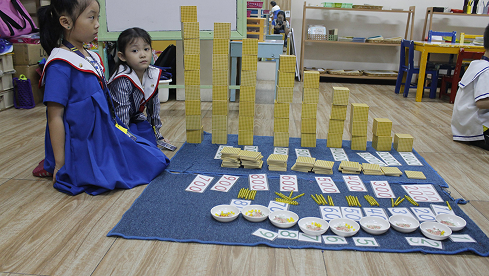
Following the Creative Curriculum, teachers use knowledge of child development, individual child’s needs, strengths, interests and socio-cultural context in order to plan activities in which the child will learn these core content areas:
- Language (English, Chinese, and Filipino)
- Mathematics
- Science
- Social Studies
- Arts
- Technology
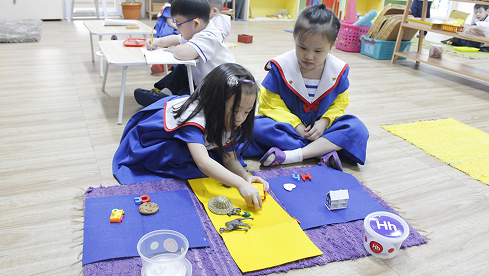
Teachers guide children’s learning through the ff. interest areas:
- Blocks
- Dramatic Play
- Toys and Games
- Art
- Library
- Discovery
- Sand and Water
- Music and Movement
- Cooking
- Technology
- Outdoor play
-
Senior High School
To establish a system of education that truly imbues the Filipino youth with the skills they need in pursuing their dreams, President Benigno Simeon C. Aquino III signed Republic Act 10533, known as the Enhanced Basic Education Act, last May 15, 2013, that supports the implementation of the K-12 Program. In response to this, the CKS College joins other educational institutions in establishing a Senior High School Program, which will be housed in the Narra Campus beginning June 2016. The CKS Senior High School program is unique for its goals of educating multilingual, multicultural global leaders with Character, Knowledge, and Service as core values.
Multilingual: The subjects in the core, applied, and specialized subjects are taught in English and Filipino. The inclusion of Mandarin classes makes the Senior High School Program exceptional because Chinese Language, Culture, and History are included in their study. Aside from that, their study of the Chinese language is based on their HSK level, ensuring that the appropriate pedagogy in teaching the Chinese subjects is used. During their Grade 12, the Hokkien as a foreign language is included as one of their core subjects.
Multicultural Global Leaders: The students are exposed to Filipino and Chinese culture as well as to other Eastern and Western cultures. The extra-curricular activities developed for the students aim to draw awareness and understanding of others’ cultures, especially in Southeast Asia. They are also encouraged to participate in different co-curricular activities for exposure and enrichment of their academic skills.
Character, Knowledge, and Service as Core Values: “Intelligence plus Character is the true aim of education.” The famous quote of Dr. Martin Luther King Jr. is one of the guiding principles of the CKS core values. The said core values are the compendium of the college’s vision and mission.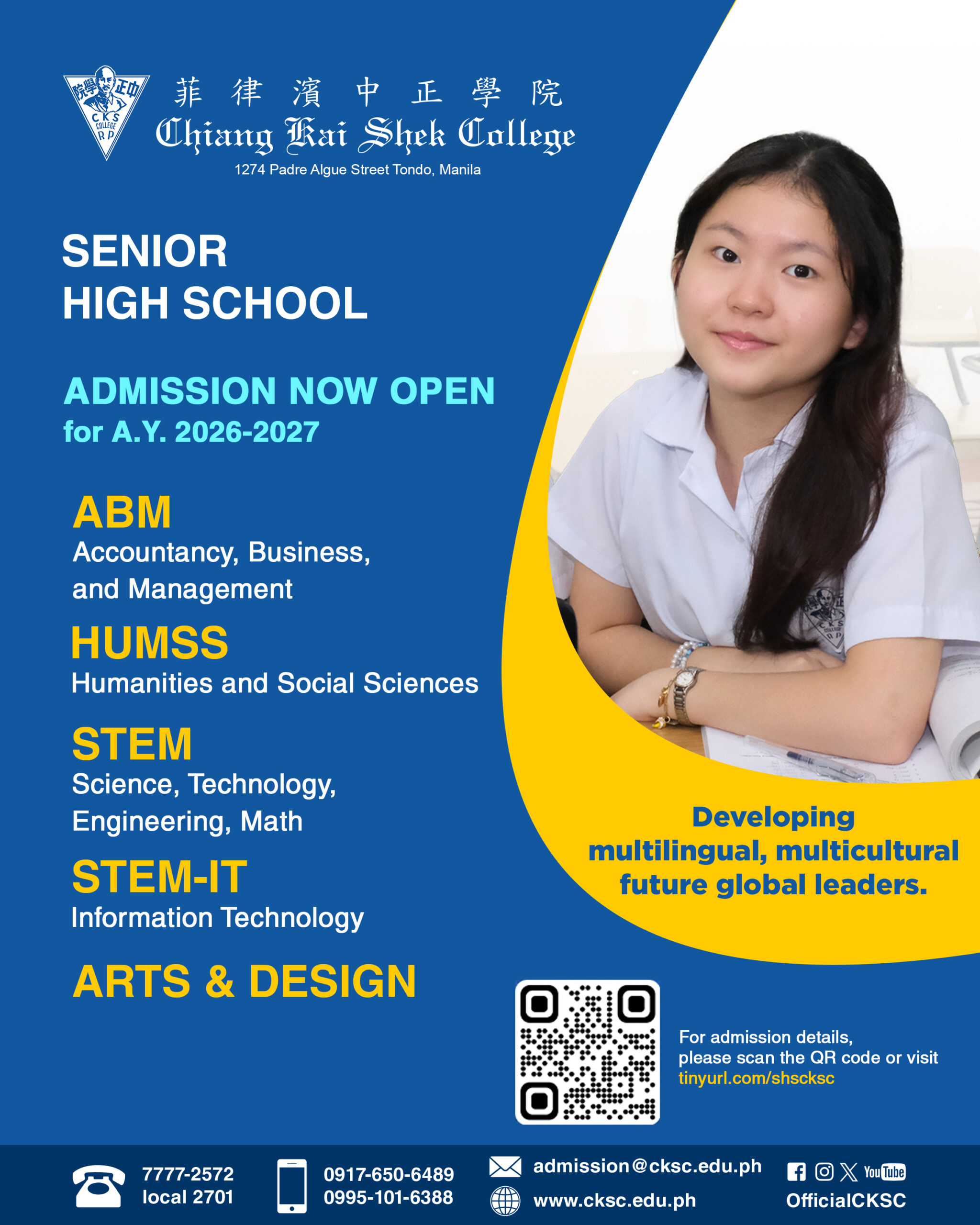
The emphasis on character is embedded in the Confucian virtues of Propriety, Incorruptibility, Righteousness, and Honor. In addition, knowledge, as one of the three core values, is primarily concerned with the aim of education for excellence through equipping students with basic academic skills and wisdom. The last is Service. This is the ultimate commitment of the college to prepare the students for nation-building and to develop in them the sense of international concern.
The Senior High School Program of CKS College was approved by the Department of Education to offer the following tracks starting June 2015:Sports Track:
Arts and Design Track:- Arts Production (Visual Arts, Media Arts, and Performing Arts)
Academic Track:
- Science, Technology, Engineering, and Mathematics (STEM)
Accountancy, Business, and Management (ABM)
Humanities and Social Sciences (HUMSS)
Technical Vocational Track:
- Information and Communication Technology (ICT)
Computer Programming;
-
Grade School Philosophy
A. GENERAL NATURE OF PHILOSOPHY, VISION-MISSION, AND OBJECTIVES
- The philosophy, vision, and mission are clearly stated.
- The objectives of the school are clearly defined and are in consonance with the school’s philosophy, vision, and mission.
- The philosophy, vision-mission, and objectives are adapted to the needs of the clientele that the school intends to serve and to the needs of the community in which the school exists.
B. COMMON OBJECTIVES
- The objectives of the school are in accordance with the educational aims of the institution to which it is affiliated.
- The school includes among its objectives a well-integrated program of moral and spiritual training of its students.
The school includes among its objectives:
- an adequate program of general education on the elementary level.
- The development of the learners towards a well-integrated life.
- knowledge of the rights and duties of a citizen of this republic.
The objectives align with the national development goals of:
- Attainment of national unity and identity.
- National discipline.
- Economic self-sufficiency.
- Cultural enrichment.
- Care for the environment.
C. ACCEPTANCE BY THE SCHOOL COMMUNITY
- The faculty members and other personnel understand and accept the school’s philosophy, vision, mission, and objectives.
- Incoming members of the faculty and other personnel are informed of the school’s philosophy, vision, mission, and objectives of this grade school.
*Orientation for all newly hired teachers has been conducted starting the school year 2017-2018.
- The parents understand and accept the philosophy, vision, mission, and objectives.
D. AGREEMENT BETWEEN PHILOSOPHY, VISION-MISSION, AND OBJECTIVES AND THEIR IMPLEMENTATION
- Service- and value-oriented objectives are included in the school’s curricular programs.
- All activities of the grade school tend towards the realization of its objectives.
- There are provisions for interaction among administrators, staff members, teachers, pupils, and parents to realize the philosophy, vision, mission, and objectives of the school.
* The President has opened her office to any teacher or employee, and she ensures the welfare of everyone.
* Monthly meetings are conducted by the Academic Director with the Supervisors and the Academic Director with the Subject Area Coordinators since the last school year 2017-2018.
-
Grade School Curriculum
In pursuing quality education and academic excellence, a school must organize its curriculum effectively, not only to meet the requirements of the Department of Education but also to realize the vision and mission of the school. A well-defined curriculum includes these major considerations: sequential development programs in all subject areas, periodical examination and evaluation of curricular offerings, well-defined subject area objectives, regular articulation program with secondary schools, well-structured special programs for all types of learners, effective correlation of the different programs across the curriculum, and maximum utilization of human, material, and community resources. An effective curriculum must show evidence that pupils have developed wholesome attitudes and an appreciation of the Filipino culture and values. Pupils must also manifest a genuine and lasting love for learning.
The curricular offerings in the elementary school are premised and chosen based on sound teaching-learning principles, on the level of maturity of the learners, and on the current developments in the field.
The course content, concepts, and skills are taught functionally to emphasize critical and creative thinking, develop desirable learning habits, and foster attitudes and values in the pupils.
The course offerings should lead the pupils to apply their knowledge and skills in their daily life situations; lead them to value themselves, their relationship with God and others, and their relationship with the environment. The offerings in each subject area lead the pupils to the needed changes and develop an attitude of readiness to respond according to their level of maturity.
* Curriculum review was conducted from February to April, 2018
- To align the objectives and the skills with the DepEd requirements.
- To include activities that would emphasize CKS College’s uniqueness.
- To incorporate activities that help the students realize the importance of their cultural heritage.
-
Grade School Cycle Class Schedule
The Grade School is following the six-day cycle schedule of classes:
- To maintain a balanced distribution of the number of minutes per period.
- To ensure that the students won’t fall short of the knowledge they would learn due to the suspension of classes
- To help students to have more focus more on the specific learning areas and have more time to prepare for the assessments due to the alternate schedule
- To be able to intensify and provide quality teaching because the period is longer for each subject
- To keep the students healthy and not be physically burdened by carrying lighter bags, as they have fewer subjects in a day.
-
Other Important Details
Close supervision is being observed to ensure efficient and effective teaching
- Coordinators were oriented about their duties and responsibilities since they are new in their posts.
- The supervisor provides constant guidance and training to help coordinators carry out their responsibilities effectively.
- Managing the teachers in their area
- Conducting observation and post-conference
- Providing them with tips on aligning the objectives and the skills in the lessons
- Pointing out to them what to spot when correcting test drafts to produce quality assessments
- A weekly meeting is conducted by the Supervisor with the Subject Area Coordinators and the Coordinators with the teachers in their area.
- Everything discussed during the meeting is sent to all teachers’ emails so they are well-informed and regularly reminded.
- Rubrics for every activity are used to avoid subjectivity.
- An anecdotal notebook for each teacher is required to monitor students’ behavior.
- Well-planned homeroom activities are provided to guide the advisers.
- Writing activity is intensified to improve students’ penmanship.
- A closer partnership with the Guidance and Discipline Offices has been established since the start of this school year, 2018-2019.
- Articulation with the Preschool and Kinder Division was done, and the Consultant is currently observing classes to bridge the curriculum of PKD and Grade 1.
- A faculty manual was provided to all grade school teachers, and they were well oriented by the Director of Academics, Dr. Rolance Chua, last August, 2017.
- The Rules and Regulations indicated are strictly observed in our division.